





"InTick is a matchmaker for derivatives trading."
Sarah's description of InTick immediately makes a complex market accessible: if you're a trader needing to execute large positions in futures or options, InTick's network helps you find a match, complete with automated workflows that communicate trades to exchanges within strict time parameters. The stakes are high: one data leak, one mistake, and trust is gone forever.
"Nobody wants to be in the disco on their own. You need everyone fighting to get in."
Building a two-sided marketplace requires perfect timing. Sarah learned this running a crowdfunding platform for animal nonprofits, where campaigns 40% funded within 24 hours had a high probability of full success. At InTick, the same principle applies: the network only works if all actors—asset managers, hedge funds, banks—are present simultaneously. Early adopters have to arrive together, not sequentially.
"Hire great people so they can tell you what to do."
As a Chief Product and Technology Officer managing both functions, Sarah doesn't claim expertise in architecture, cybersecurity, or front-end design. Instead, she hires VPs who are experts in those areas and focuses on understanding their decision-making process. "You don't care about the answer. You need to know: did you know how to get to the right answer?"
"AI summarizing user interviews doesn't capture the pauses, the facial expressions, what's not said."
Despite being experimental with AI tools across her team, Sarah draws a hard line on user research. Listening to interview recordings while walking the dog, watching facial expressions, hearing tone shifts—these reveal pain points that summaries miss. "I can go head-to-head with a derivatives trading expert now on what users want because I really heard it."
"If you're a CTO without a product person, ask yourself: are we in deep experimentation mode?"
Sarah is writing a handbook for CTOs on managing product organizations—because she keeps seeing them struggle after being told "product isn't working, fix it." Her advice: in early-stage startups during rapid ideation, merging product and tech under one leader makes sense. As you approach scale or if you're deep tech, demerge the roles. VPs of engineering who love their craft might prefer reporting to a CPTO rather than taking on admin-heavy CTO responsibilities.
"For startups, it's unusual to have such a high bar. But we have zero tolerance for data leakage."
Unlike typical early-stage companies where users tolerate bugs, InTick operates in an environment where revealing anything—even accidentally—to the market means instant loss of trust. The technology has to function perfectly from day one. This creates atypical constraints for a startup: long procurement cycles, high compliance bars, and extended onboarding timelines.
"Your career won't go as planned. Say yes to opportunities even if they're not quite what you expect."
Sarah trained as a lawyer, moved to the U.S., fell into technology by accident while working at an animal welfare foundation, founded a crowdfunding platform, became a product coach for enterprise companies, and eventually joined InTick as co-founder. None of it was planned. "Learn to say yes to things. Who knows where it will take you."
Stay tuned for more conversations on product leadership, building in regulated markets, and the skills AI can't replace on CTO2CTO.
Host: Lucas Hendrich, CTO at Forte Group
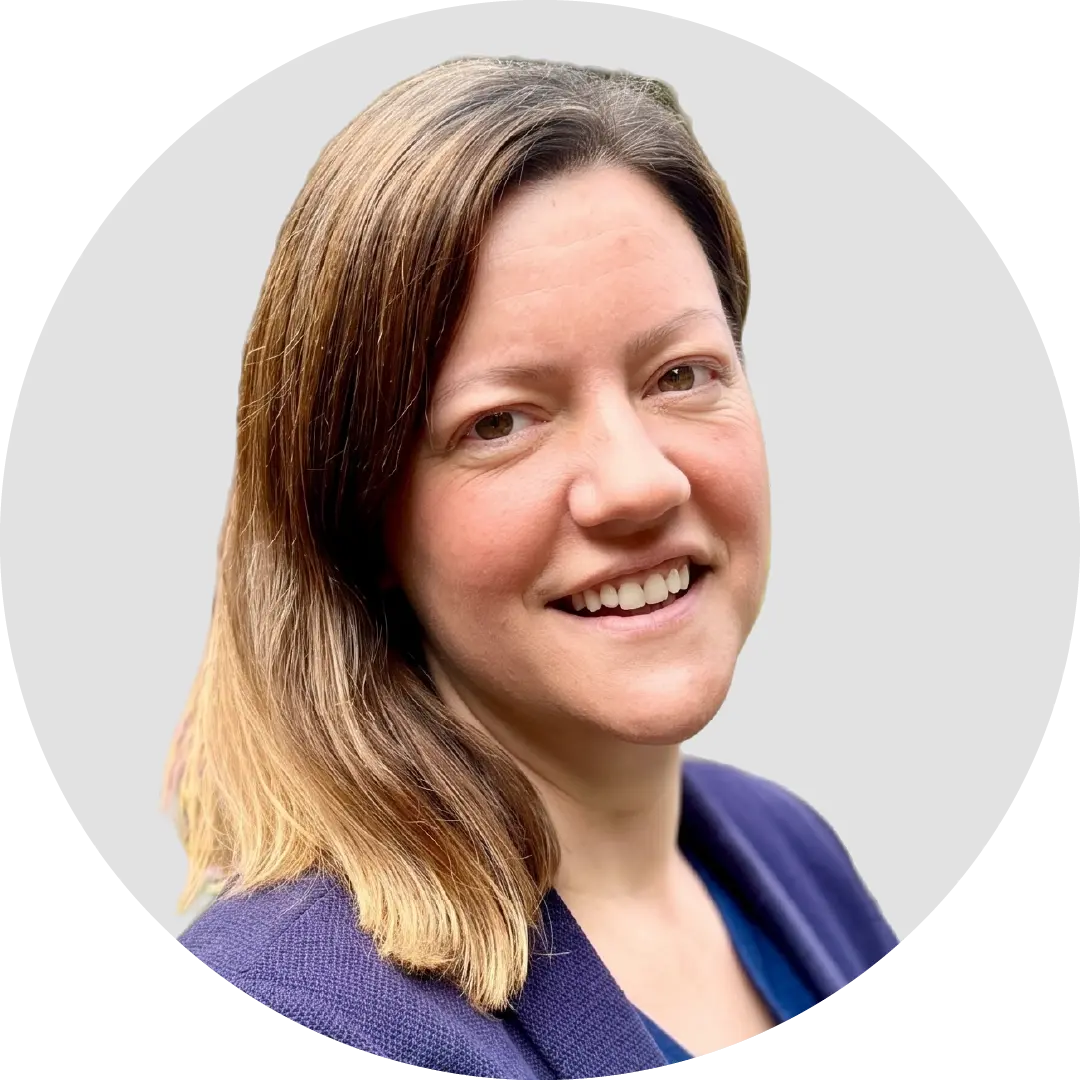
Guest: Sarah Timms, Co-founder and Chief Product and Technology Officer at Intick
Lucas Hendrich: Welcome to the CTO to CTO podcast, where chief technology officers dig into the challenges and opportunities leaders face every day at the intersection of business and innovation. I'm your host, Lucas Hendrich, CTO at Forte Group.
Today we have the pleasure of being joined by Sarah Timms, who heads up product and technology at Intick. Welcome — it's great to have you here.
Sarah Timms: Thanks for having me.
Lucas Hendrich: As you might tell from your accent, and maybe the sound of the Tube running underneath us, we're in London today, on a rainy day. I hope the sound isn't too much.
Lucas Hendrich: To get started: it would be too broad to just say you run product and technology. First, walk us through what Intick does, because for people unfamiliar with financial markets, it can seem confusing.
Sarah Timms: Sure. Our tagline is that Intick is the listed derivatives block network, which will probably mean nothing to most of your listeners. I like to think of Intick as Tinder for traders. If you need to trade large positions in futures or options, you can come to Intick and our network and find someone to match with. That's the proposition.
Lucas Hendrich: That's such an interesting take; I wasn't expecting that. So you swipe left if you don't like…
Sarah Timms: If you don't want to trade with them, you swipe one way; if you do, you swipe the other.
Lucas Hendrich: Very interesting. So from a product standpoint, you're obviously driving people toward connections. And I guess a huge part is removing friction, because any kind of block exchange of derivatives or similar products usually involves a lot of friction.
Sarah Timms: Exactly. First, it can be very difficult to find a counterparty. "Block" means a very large quantity, so if you're trading wholesale, finding someone with another large position to match against can be hard.
Then there's a lot of friction for the user. If I'm a trader at an asset management company, I might have to speak to multiple actors in the landscape to find a match, and keep track of all of it myself. There's no good automated way to do that. Then, when two counterparties match, it has to be communicated to the exchange. We remove that friction too, and make it very automated and process-driven so there are no errors.
Lucas Hendrich: This might be a naive question, but does that include the back office as well?
Sarah Timms: Exactly that. The exchange sets the rules. Once two counterparties match, there are very strict time limits for communicating that to the exchange: party A and party B have matched. And it actually has to be a bank that does it.
There are multiple actors involved in getting a listed derivatives block match done and reported to the exchange. Our platform automates each of those actors' responsibilities to get the trade to the exchange. So it's very complex, but we make it very easy.
Lucas Hendrich: I'm still on the Tinder idea. What are the attributes, and how does matching occur? What makes a certain trade attractive to a given asset manager?
Sarah Timms: I don't know how far the Tinder analogy goes, but up front we have to understand the parameters someone wants to trade with. They'll say, "This is the maximum price I'll trade at. This is the quantity I need to trade. This is how long I'll leave the order active." They set the parameters up front.
Then other counterparties come into the platform, and the Tinder analogy still applies: if two parties have matching parameters, we put them together and they can match. So the analogy still works.
Lucas Hendrich: As head of product, I'd assume your main metric is onboarding as many firms as possible.
Sarah Timms: Actually, no, interestingly. The financial services companies we work with are asset managers and hedge funds, and block-size trades are very, very large positions.
Lucas Hendrich: Mm.
Sarah Timms: So our product is only for the very largest traders in the market. In that respect, we need to onboard quite a small number of companies. The challenge is that the onboarding bar is very high, and so is compliance, so onboarding those companies can take a very long time. Our metrics are more about things like the number of matches happening on the platform.
Lucas Hendrich: With a smaller market of larger clients, is it more challenging to get user feedback than it would be…
Sarah Timms: Definitely. Really challenging. We'll probably talk about this more later, but in B2C you have millions of potential users. For us, there are only a few users within each buy-side organization, and they're very busy.
It's also a very confidential environment. No data leakage can happen at all, and they really guard their trade secrets. So getting user feedback can be very difficult. But we have to. We've found ways, because without it we'd be building blind, and that's something a product manager should never do.
Lucas Hendrich: How are you doing it? More observability and traceability within the platform itself?
Sarah Timms: It's actually taken a long time. It's come from really leveraging relationships and building trust…
Lucas Hendrich: Mm-hmm.
Sarah Timms: …with the early adopters we work with, until they're comfortable sharing much more. We've also talked to people in role-adjacent positions. They're not doing the trader's job, but they're very close to it — perhaps providing technology for the trader, or handling some back-office functions. So we can get enough insight from people like that too.
And I'm one of Intick's three co-founders. The other two have spent their entire careers in listed derivatives, so they bring a lot of expertise.
Lucas Hendrich: So they know what good looks like.
Sarah Timms: They do. And even more, they know what bad looks like, because that's the technology we typically see.
Lucas Hendrich: You want it to be less bad.
Sarah Timms: Exactly.
Lucas Hendrich: I was going to save this question for later, but I'll jump to it now, because I'm thinking about matching. Earlier in your career, you headed up — I assume — a similar role at a nonprofit that matched donors with causes related to animals. Is that the right way to think about it?
Sarah Timms: Correct — animals and the environment.
Lucas Hendrich: Any parallels or things in common?
Sarah Timms: Gosh. LoveAnimals.org was a crowdfunding platform. There are some parallels. I founded it back in 2011, when it was one of the earliest crowdfunding platforms in the United States, and crowdfunding was still being pioneered.
I suspect people at every startup would say the same, but we were really at the coalface of disrupting a very traditional industry: the way nonprofits fundraised. So the parallel is having to be really persuasive and learning to give a very compelling pitch for why someone should move away from their existing process and try something new, which is scary for people.
Crowdfunding is also about finding donors, so there's the matching element you mentioned.
Sarah Timms: And timing is everything. I was thinking about a stat from 15 years ago — I don't know if it still holds. Back then, if your crowdfunding campaign was about 40% funded within 24 hours of launch, the probability of reaching your full target was very high.
So timing was everything, and you had to carefully orchestrate when you went live. The charity had to reach out to its own network and bring those people in to donate, and then our technology would create a ripple effect.
It's the same at Intick; we've had to be really thoughtful. Ben, one of the co-founders, has a great line: "Nobody wants to be in the disco on their own." You want everyone coming to the disco, with a big line out front and everyone fighting to get in. So it's about timing.
It's really the same with Intick. A network only works if all the actors in the industry are there at the same time. So we've had to be very thoughtful about timing, and work closely with our early adopters to make sure those early participants find one another.
Lucas Hendrich: One thing that's different, I assume, is that crowdfunding is almost extreme B2C. It'd be interesting to know what choices you'd make now, given the attention economy.
Sarah Timms: You mean what I'd do differently with LoveAnimals?
Lucas Hendrich: Yes. As a founder, what would be easier now, and what would be harder?
Sarah Timms: Great question. I think maintaining attention would be harder. It's funny: I look back all the time and ask what I'd do differently based on what I know now, and I never know how to answer, because I think I actually did a lot of things right.
In the end, it wasn't commercially viable as a business. So would I have started it as a for-profit company instead of a nonprofit? The company that built the crowdfunding technology was itself a nonprofit, so raising money to fund itself was quite difficult.
Intick is a for-profit company, at the seed, pre-Series A stage, and fundraising is almost easier, because investors just want a return on investment. When people invest in a charity, they're not looking for a financial return. They're looking to change the world and make it better, and that's much harder to demonstrate.
Lucas Hendrich: Absolutely. It's interesting, because about 15 years ago, much of my technology experience came from a startup where I was employee number 50-something. I wasn't a founder, and I was doing more hands-on work. The company was eventually acquired by Blackbaud, whose slogan, I think, is still "an ecosystem for good."
Sarah Timms: Oh, yes.
Lucas Hendrich: So, a lot of companies — not nonprofits, but serving nonprofits — involved in grantmaking and removing friction from connecting people who want to donate with causes. The challenge then was defining what good looks like in a non-anecdotal way. How do you create metrics for outcomes, so you could show someone a prospectus and say, "If you donate to these causes, you'll get some percentage return in social benefit"?
Back then that was hard, mostly because data wasn't readily available or easy to collect; there was all kinds of friction. If I started something like that now, there'd be many more options. And it's interesting to think about how consumer behavior and expectations have evolved over that time.
Sarah Timms: Absolutely. You mentioned people's attention. I don't know what the crowdfunding industry is like anymore in the US, since it's been several years since I left it. But I think philanthropy is still huge in the US, more so than in the UK.
Good crowdfunding platforms made it very easy to donate. They spoke to people who were on Facebook, doing a million things, with low attention. They made it quick and easy to see causes, get information about them, and decide very quickly: "That one — that's the one I'll invest in."
Again, there are similarities to Intick: How do you present information so two parties can find each other quickly and efficiently?
Lucas Hendrich: One big distinction, though — correct me if I'm wrong — is that with Intick, these trades and matches are entirely private, right?
Sarah Timms: They are.
Lucas Hendrich: Because otherwise they'd influence the market.
Sarah Timms: Yes. Highly confidential, with zero tolerance for data leakage. That means not revealing anything to the market, or to anyone in it, that they could use to trade differently.
I don't want to use the word "paranoid," because it sounds negative. But when you're building a startup and working with early adopters, there's usually some tolerance for bugs and mistakes. That hasn't been the case with Intick. It's been atypical: the technology has to work, because the stakes of a single mistake are too high. If we accidentally revealed anything to anyone, we'd never be used again. The engineers and I talk about that a lot. It's unusual for a startup to have such a high bar.
Lucas Hendrich: Absolutely, and then there's earning that kind of trust. Are there incumbents?
Sarah Timms: No. There's no good alternative other than picking up the phone or using a chat tool to contact people manually.
Lucas Hendrich: Right. So congratulations on being first to market.
Sarah Timms: Thank you.
Lucas Hendrich: But congratulations — now you have to go through, what, a two-year procurement cycle?
Sarah Timms: Very long. That isn't typical for startups either, because you usually have to show results in a shorter cycle. So the way we've had to be funded is more about ensuring we have the longevity and runway to handle these very long onboarding cycles.
The good news is that it started about two years ago, and those companies are now starting to come through. We're in the really exciting phase of getting everyone corralled, and we're ready to take off.
Lucas Hendrich: That's great.
Lucas Hendrich: Now we get to the part I'm always interested in: what does this role mean, and how do you explain it so a business user would understand? I struggle to explain what I do to my children. There's a meme where someone asks, "What does your dad do?" and the answer is, "He has meetings. He sits in front of a screen."
Tell me how the role works at Intick, and how you came into it. It's also been a topic in a couple of episodes: the Chief Product and Technology Officer, a role combining product and technology. It aligns with the trend that, as we can generate code and ideate faster, everything becomes more naturally product-driven. There's an evolution there. Dig into that a bit, whether at Intick or in previous roles — we'll get into those too, because I think you've done a lot of interesting things.
Sarah Timms: OK. The way I describe being chief product and technology officer in pitch meetings is that I'm there to ensure the product's commercial viability, and that it meets the strategic goals of Intick and of the customers we serve.
In practice, that means taking everyone's great ideas — usually based on assumptions — and testing those assumptions and hypotheses through very rapid experimentation, to make sure what we think is right actually is. Are we solving a problem people care about? Are we solving it in a way they can use — is our solution usable? And can we make money from it? That's really the textbook role of a product manager.
Sarah Timms: At Intick, we decided that combining product and technology under a single person worked for us, for a few reasons.
First, I'm seeing more and more merging of product and tech. Sometimes it's a chief technology and product officer — a CTO managing product — and sometimes a chief product and technology officer — a product person managing technology. In the past, I kept being brought into companies by CTOs who'd been told, "Here's product. It's not working. Fix it." So I'd go in and help those CTOs.
I started doing some research, because I actually want to write a handbook for CTOs on how to manage a product organization.
Lucas Hendrich: So you're going to train CTOs to become CPTOs.
Sarah Timms: Yes, because I felt bad for them. I kept seeing it happen over and over.
Lucas Hendrich: I'm dying to hear some hints.
Sarah Timms: I was interviewing a lot of CTOs, and a theme emerged. They'd say, "Look, I can't be an expert in architecture, cybersecurity, delivery, QA, data science, and all of that. I have to put VPs in place who are experts in those areas, and then my job as CTO is to manage those people."
I thought that was really interesting, because I'm a CPO, and I'm not an expert product designer or researcher, for example. I'd always hire those experts to work for me. So I saw the similarity. I really subscribe to the view that you hire great people and don't tell them what to do. You hire great people so they can tell you what to do.
That works provided you can really understand their reasoning. Say you've hired a VP of engineering and they have a choice to make. You can ask, "What options did you consider? Why did you rule this one out in favor of that one?" You check their working, like in math. You don't really care about the answer itself; you need to know they knew how to reach the right answer. If I'm satisfied of that, I have complete trust in the decision the VP of engineering, or whoever, has made.
So I thought, I can get behind merging the two roles in some cases. Especially for startups going through really rapid ideation and experimentation, we're not trying to build a tech stack that can survive Armageddon or scale, because we're still figuring out product-market fit. As we approach it, I'd advocate much more strongly for a dedicated CTO, especially if we were deep tech. But for us, it made sense.
Sarah Timms: For listeners who are CTOs, or VPs of engineering aspiring to be one, I'd offer two pieces of advice.
First, if you're working under a product person, you can help that product leader understand when it's the right time to split the two roles. And if you've helped them, maybe you can be the CTO.
Second, if you're a CTO without a product person, really ask yourself whether you're in a deep experimentation phase where a product person would help. If you are, go find one.
And for VPs, think carefully about whether you want the work that comes with being a CTO: a lot of admin and paperwork, vendor management, reading contracts. If you really love your craft, being a VP of engineering under a CPTO might be an awesome job, because you lead the technology side without all the boring admin.
Lucas Hendrich: The toil — which, fortunately, AI helps with enormously.
Sarah Timms: Yes.
Lucas Hendrich: So I think any AI-native startup has a huge advantage right now. But on the human side, it also drives higher expectations. And product-market fit is everything.
Sarah Timms: Yes.
Lucas Hendrich: The best tech stack in the world won't guarantee product-market fit. The worst example is an incredibly complex yet beautiful application with no easy entry point for users.
Lucas Hendrich: As you were talking, I was thinking: you choose your experts. If those experts are AI, I'm curious how you manage that. You have technical staff you can task with going out and trying different solutions and exploring for you, as opposed to prompting yourself. How is that shifting for you? Are you gaining enough trust in the responses? At what point does it shift from human expert to Claude, or whatever your model of choice is?
Sarah Timms: I don't know is the answer. What I can tell you is that we're really trying to be experimental at Intick. The development team and I have spent a lot of time working out the rules of the road for using AI: making sure we're not inadvertently giving away any data, exploring IP concerns, that kind of thing. So I know they understand when they can and can't use AI.
I really encourage people, in whatever their discipline: if you want to trial a tool, let's trial it. We'll get you a subscription and play around with it to see what we can do. One of our front-end engineers is learning how to write an AI agent. Our designer is trialing different tools. So we're still in the learning phase.
But I think it's really important to prepare people in our company to be comfortable using AI: to be playful and experimental with it, to understand the rules of the road so we use it safely, and to genuinely enjoy using and trialing it. It's still very early days.
Sarah Timms: One thing I'm careful not to do is listen to all the hype. It's easy to go on LinkedIn and see people posting, "We've managed to fire 50 million people, and now it's just me doing everything."
Lucas Hendrich: Mm-hmm.
Sarah Timms: I'm really careful. I go to CTO roundtables and listen to what other CTOs are doing and finding, and I take comfort that they're doing pretty much the same as me. They're making sure their workforce is ready and knows how to use it. That usually starts within tech and then spills into other areas of the business.
I'm also careful not to use AI just for the sake of it. I apply the same principles I always do. We have a problem to solve, we convene the stakeholders, and we look at different ways to solve it. Could AI solve it? It goes into the mix as a potential solution. We try different solutions, and if AI is the best one, great, we go for it. If not, we move on.
Lucas Hendrich: I think many organizations are in that same space right now, despite the alternate universe where everything is agentic and the org chart is moving to agents.
One challenge we see is balancing developers' autonomy to get comfortable and try things. People are very opinionated, which makes it hard to standardize; everyone has different tastes. And when individuals can go from zero to 100 in two seconds, several of them working on a complex code base creates a whole different coordination problem.
That's where I think maturity is really hard to achieve, unless you create guardrails that limit autonomy in ways you don't want, which stifles it. So it's an interesting moment.
Sarah Timms: Luckily for Intick, we're still so early-stage and quite small. My answer would be different with a much bigger development team. Frankly, that's something I'd defer to an expert on — a VP of engineering: "How do we roll this out sensibly across 80 or 200 engineers?" We're much smaller, so we don't have that challenge.
Lucas Hendrich: It'll be interesting to see how it scales.
Sarah Timms: It will. That'd be a great problem — a champagne problem. I'd welcome it.
Lucas Hendrich: Going a bit into your background — correct me if I'm wrong — you've worked with larger organizations in the past. GlaxoSmithKline, is that right?
Sarah Timms: Yes, I did some contracting there.
Lucas Hendrich: So a very large enterprise — the polar opposite of being a founder, whether at Intick or…
Sarah Timms: LoveAnimals.
Lucas Hendrich: LoveAnimals, yes. Does that help? Do you bring the paranoia, because you know the large-enterprise pressures your clients face?
Sarah Timms: Yes, I do. I really value having worked in a startup environment, in mid-size companies about to scale, and in giant enterprises.
At GSK, I was actually doing product coaching: training product practitioners, usually people whose job titles had changed overnight during some transformation — "We're transforming to Agile," or "to the product operating model." It was about carefully helping them learn how to succeed in their roles.
Coming from a startup background, I knew what good looked like, because startups naturally lend themselves to good product practices. You have to be scrappy and fast, and you have to experiment. You can't make assumptions, because you'll burn through cash too quickly. You simply can't afford to make mistakes and build the wrong thing.
I always held that in my head with these enterprise companies, but the key was understanding that it would take them years to transform to operating that way, and they'd probably never fully achieve it — certainly not the way a startup can. So I could paint a vision of what good would look like and help them get there slowly, while understanding all their challenges. When you're a big enterprise with thousands of corporate clients, you can't make massive product changes overnight; it would be too disruptive to the customers you serve.
I've taken those lessons back to the startup world with Intick, and they've served me well. We're dealing with very large companies whose job is to trade and make money, and nothing had better get in the way of that. So you have to be very thoughtful about how you take a product to market. We talked earlier about how hard user research is, because they're thinking, "Get out of my way; I'm trying to do my job." So it's very important to understand, from their perspective, what it feels like to work in that big environment. Without my enterprise experience, I don't think I'd have done as well; I'd probably have made more mistakes.
Lucas Hendrich: There's also a challenge in large enterprises — at least in what I've observed — that aren't building a digital product the way a startup does. Their product might be tables or farm equipment, yet they have a huge internal user base that needs to be happy and satisfied. That's often where you can create value very quickly, in terms of their own internal productivity and engagement.
Sarah Timms: To me, there's no difference. Whether it's B2B, B2C, an internal product, or a product a technology company sells, it's all the same. We're serving a user, and they need an amazing experience. The product has to be easy and intuitive, and it has to make their day better.
Obviously, the motivations of an animal nonprofit raising money and a trader at a massive hedge fund are different. But at the end of the day, the trader still has to make money, do their job, and answer to a boss.
In some conversations, I hear fear in their voices: "I'm so scared I'll accidentally sell when I mean to buy." That makes me feel bad. I want to give them a product so easy to use that they won't have that fear in the pit of their stomach. They can just load up our product, it makes their day better, and it makes their boss happier because they're happier. I aspire to that with every product I build.
Lucas Hendrich: Looking at all the organizations you've worked with, in different domains, I'm curious about your learning process. One approach is to become an expert in many things; another is to find the one common thread and drive that. Where do you sit? If you started a new company a year from now in a totally different field, how would you approach that market? Would you just look for where the incentives are? What's the thought process?
Sarah Timms: In terms of how I learn, I always think a product practitioner's role is to be a jack of all trades and master of none. Product's role is to bring the right people into the room to reach the right answer. I don't build technology or design it. But I make sure all the experts are in the room so we get to the right product.
Throughout my career, I've been sector-agnostic. First, I love jumping into a completely new sector; it keeps me energized and interested. Second, I've naturally been able to learn enough to know whom I need in the room.
That said, trading listed derivatives is one of the most complicated fields I've jumped into. I've spent a lot of time on Coursera, watching, training, and learning to get up to speed. I'll never know as much as a derivatives trader, but I know enough, and I know when to bring in a subject matter expert.
If I started another company in a year, I'd probably be a bit more opportunistic. If there were an obvious problem with no solution, I'd jump into it, whatever the domain. But I'd want to do it with co-founders. That's something different about LoveAnimals versus Intick: I have co-founders.
Lucas Hendrich: And your co-founders would be people — not whatever model or model nickname you choose?
Sarah Timms: I think I'd prefer people.
Lucas Hendrich: If you had to get up to speed very quickly, are you using AI more to do that?
Sarah Timms: Oh my goodness, yes. It's been a game changer. I can have very long conversations with AI, and it's really helped me learn and understand. I know it's probably not perfect, but it gives me enough insight to know more or less, and then I can double-check with genuine experts.
Lucas Hendrich: I feel the same way. I think there are two kinds of learning, and I'll relate this, imperfectly, to Thinking, Fast and Slow — or just the idea of System 1 and System 2 thinking. For the broader audience, I highly recommend that book; it changed my life.
One system handles intuitive responses, which are often wrong mathematically or probabilistically. But a firefighter who's been on the job for 20 years has excellent intuition and acts without thinking, because of practice. System 2 engages deeper cognition, which actually burns more calories.
On the positive side with AI, your learning style determines how you engage with it, not the other way around. I don't need to find a tutor who matches my learning style; I can learn however I want. Lately, for example, I used to read a lot of white papers, then started summarizing them like everyone else. Now I'll use NotebookLM to create a podcast from one, because I listen to a lot of podcasts — and make them. It's a great way to learn: Socratic, a dialogue.
Lucas Hendrich: But I think the risk — and I'm taking a while to develop this — is that a derivatives trader has a physical response when something goes badly. There's another great book: The Hour Between Dog and Wolf, by a neuroscientist. Anyone in the audience looking this up will be laughing at me. The gist is that it studied traders during the build-up to the 2008 crash and how the market moved in a very physiological way. It shows that intuition — touching the hot stove — is ultimately what cements learning.
Sarah Timms: I learn by doing. I was never a great student in a classroom; I'm not academic that way. I really thrive when I'm thrown into something and have to figure it out.
I think a lot about this, particularly in product, design, and research: having AI summarize transcripts of user interviews. I can see why you'd do it if you're busy. But I listen to the transcripts. I saw someone post this on LinkedIn, so I'll borrow the sentiment: hearing the pauses and seeing the facial expressions when someone describes something doesn't yet come through in an AI summary of 20 interview scripts. It does if I'm out walking the dog listening to it, or watching the video.
It's what's not said — reading between the lines. I haven't yet found AI effective at that kind of intensive learning. And if you take the time to do it, you can go head to head with a true derivatives trading expert on what users want: "No, I believe they want this." I don't think I could do that without taking the time to really…
Lucas Hendrich: …hear where the pain points are.
Sarah Timms: Hear it — really hear it in the tone of voice, the pauses, the facial expressions — and really observe and look for what wasn't said.
Lucas Hendrich: We laughed about this before. I'm constantly experimenting with AI to research upcoming guests, and sometimes it's completely wrong or finds the wrong person. For some reason, I thought you had a background in behavioral psychology. But it sounds like psychology is a huge part of product management.
Sarah Timms: I think it is. You need a lot of empathy. You have to wake up wanting to make people's day better through your technology. If you don't care about that, I think you'll bring a subpar product to market.
Lucas Hendrich: We also talked about how you didn't imagine ending up here. Tell me about that trajectory. And I'll pause to note that we often discuss on the podcast how people come from a whole variety of backgrounds. What CTOs and CPTOs do varies enormously, and everyone brings multidisciplinary value to the role. That's hard to put on a résumé and hard to spot in an interview, yet it enriches what we bring. Sometimes it's things that come easily to us, so we discount them, but they're valuable precisely because they don't come easily to others. Maybe others don't intuit their way through a complex subject to the pain point the way you do. Anyway: how did you end up where you are?
Sarah Timms: As we were saying earlier, I started my career in law, and I'd have made a terrible lawyer. I think the attention to detail required was too much for me, and I found it kind of boring.
Lucas Hendrich: They also inflict pain sometimes.
Sarah Timms: A lot.
Lucas Hendrich: When you get their bill. That's when they inflict the pain. Sorry to any lawyers — I have a lot of lawyer friends.
Sarah Timms: So do I, and I very much admire them. But I shouldn't have been a lawyer. I trained and qualified, then moved to the US — my husband is American — and fell into technology completely by chance, as I think many people do.
I was working for a foundation, the UK equivalent of a trust, funding animal nonprofits in Colorado. We ended up building a database for a program we were running. I didn't even realize we were taking a product to market. It flopped. Nobody wanted it; it was terrible. It was the first time I'd really worked with developers, and I realized you can go to all that trouble and build something nobody wants.
Sarah Timms: The next opportunity came in the field of animal welfare and funding. I knew that only about 2% of all giving in America went to animals and the environment combined. I learned about crowdfunding and how it was bringing new donors to sectors, so it had the potential to increase that 2%. Nobody was doing it in our space, so I thought, "OK, I have to then. This is so important. There's a problem and no solution. Fine, I'll do it myself."
So I ran that crowdfunding platform for six years, and loved it.
Sarah Timms: I moved back to the UK and reflected on which parts of that role I loved most. It was working with the developers. Even today, I love, love, love working with developers. I think their creativity in solving problems is a beautiful thing.
So I stayed in technology in the UK, in product leadership roles, then moved into coaching. I was accepted into a program with Silicon Valley Product Group — the grandfathers of product management. You had to show you'd been coaching people in proper product management, not product ownership, which is a whole other discussion. So I joined that program and started going into companies to help them build their product capabilities.
To my earlier point, I was often brought in by CTOs. I did interim work, coaching, and fractional work — the trendy new word for part-time. I ended up working with a man named James Gotter, who has a listed derivatives background. I was consulting for him, and as we discussed strategy for the coming year, we just kept talking, and I ended up joining as a co-founder alongside James and another co-founder, Ben. The rest is history.
So it was totally by accident. If there's a message for listeners, it's this: if you see an opportunity, grab it and work really hard, even if it's not quite what you expected. It can lead to amazing things you never anticipated. Learn to say yes to things, and who knows where they'll take you.
Lucas Hendrich: I think that's great advice, especially now that everything is changing almost daily. I tend to be optimistic; I think it will create more opportunities.
Sarah Timms: Me too.
Lucas Hendrich: But there's certainly a lot of uncertainty, too.
Lucas Hendrich: Sarah, it's been a pleasure having you on the podcast. Congratulations, and best of luck with the next stages for Intick.
Sarah Timms: Thank you so much for having me. It's been great talking.
Lucas Hendrich: Wonderful. Thank you.
That's it for this episode. Join us next time for more real-world conversations between technology leaders. And if you liked what you heard, subscribe to CTO to CTO. See you soon.