Top 18 Manufacturing Software Development Companies in the USA (2026)
TL;DR
"Manufacturing software" describes at least seventeen different products bought by three different budget holders. A firm that builds dealer portals cannot implement your MES. A firm that implements your MES will decline the dealer portal.
Most roundups ignore this and produce one ranked list, which stops being useful the moment you know what you actually need. The cost of getting it wrong is measurable: the National Academies of Sciences, Engineering, and Medicine reports that small and medium-sized manufacturers generate close to half of US manufacturing output yet run at only 47% of the productivity of larger firms, largely because they lack the in-house capacity to evaluate and implement advanced manufacturing technology.
Find your starting point
3 buying centres
If your problem is…You needStart with
If your problem is…Downtime, OEE, scrap, batch records, shop-floor visibility
Pick one row before you brief anyone. Firms in the top row and the bottom row share no certifications, no platform partners and almost no clients. Briefing the wrong half costs a procurement cycle.
The three buying centres
Separate budgets · separate vendors
Plant floor & production
Budget holder
Operations, plant IT, controls engineering
Platform vendors you'll meet
Rockwell
Inductive Automation
GE Vernova
Siemens
AVEVA
Product engineering
Budget holder
Engineering, R&D
Platform vendors you'll meet
PTC
Siemens
Dassault Systèmes
Commercial & supply chain
Budget holder
Sales, marketing, commercial IT
Platform vendors you'll meet
Salesforce
SAP
Infor
Sage
Oracle
These three rarely talk to each other. It's the most common reason manufacturing software projects stall — the budget sits in one centre and the dependency sits in another.
How firms were assessed
Not every test applies to every category. Each profile states which apply.
Proof - a named client with a number attached. Not a logo, not a capability page.
Plant systems - demonstrable MES, SCADA, historian or PLC work. Reading production data out, or writing into it.
OT credentials - ISA-95, IEC 62443, or equivalent. ISO 27001 and SOC 2 are IT security credentials and tell you nothing about whether a firm can safely touch a control network. We distinguish between firms that publish a named standard and firms where competence is inferred from platform certification and practice area. The second is a reasonable signal. It is not the same thing, and we've marked it differently.
Production type - discrete, process, or batch. Three different competencies. Most firms have one.
Platform certification - current partner tier with the vendor whose product you run. Decisive in commercial categories where the platform is the product.
Sources for the plant-floor firms: Control Engineering's 2026 System Integrator Giants ranks the top 75 firms by self-reported system integration revenue, from the Global System Integrator Database. Inductive Automation and Sepasoft maintain separate certified-integrator directories. Firms appearing at premier tier in both, while also ranking by revenue, have cleared two independent third-party filters. Certifications are renewed and revoked - verify current status before shortlisting.
Positioning18 firms3 axes2026
Where each firm actually works
One axis per buying centre. Left to right: how close the firm gets to the control layer. Bottom to top: delivery scale. Front to back: depth of product engineering and PLM practice. Drag the plot to rotate it.
Drag to rotate
Select a firm. Points to the left work at the control layer. Points to the right build the systems above it. Points set back into the depth axis carry a real PLM and product engineering practice; a third budget, owned by engineering rather than operations or sales.
Plant floorCommercialProduct engineering
Key
Note 1 — The third axisProduct engineering isn't a point between the control layer and commerce; it sits upstream of both, which is why it needs its own dimension. Firms set back into the depth axis hold PLM implementation practices on PTC Windchill, Siemens Teamcenter or Dassault.
Note 2 — Reading positionHorizontal and depth positions reflect published evidence of work at each layer, not marketing claims. Vertical position reflects delivery footprint: headcount, locations and system integration revenue where reported.
Note 3 — The vacant cornerNo enterprise-scale firm works only on the commercial side. Rotate to the right-hand face and the top-right stays empty. A manufacturer wanting commerce at global scale accepts a systems integrator that will also sell it plant work, or uses a specialist.
The seventeen categories
Plant floor & production
8 categories
CategoryWhat it doesWho serves it
CategoryManufacturing Execution Systems (MES)
What it doesWork orders, process rules, genealogy, traceability, production against schedule
Firms here employ controls engineers and hold platform certifications, and are usually regional in delivery. Almost none appear on general software-development lists.
Product engineering
2 categories
CategoryWhat it doesWho serves it
CategoryPLM & PDM
What it doesProduct data, BOMs, engineering change, configuration across the lifecycle
Where most manufacturers' software spend goes. None of these firms will touch your control network — that's a different job, not a limitation.
The firms
Order within each group reflects how this guide is organised, not a quality ranking. These groups do different jobs.
Plant floor & production
01
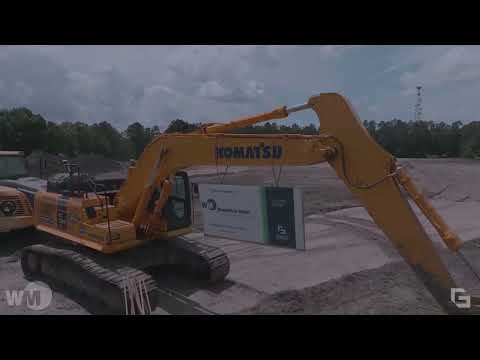
RoviSys
HQ
Aurora, OH
Founded
1989, by John Robertson in Cleveland
Scale
~2,000 employees group-wide; 900+ engineers, developers and project managers; 21+ locations across North America, APAC and Europe
SI revenue
$477.0M of $638.0M gross - #2, 2026 SI Giants
Certifications
CSIA certified; Ignition Premier; Sepasoft certified; Rockwell Water/Wastewater Recognition Program
Industries
Life sciences, chemicals, CPG and food & beverage, glass, metals, oil & gas, pulp & paper, power, building automation
Pricing
Packaged offers listed publicly on AWS Marketplace: Cloud Visualization Starter Kit ~$40,000; OT Data Quick Start ~$125,000 (with Cognite Data Fusion). Platform licences priced separately. Bespoke work quoted by scope
Why consider them
The largest omission from every manufacturing software list we reviewed, including our own previous ones. The nation's largest privately held systems integrator, with 2,500+ control, test or MES systems designed, created and installed. $477M of $638M gross revenue comes from integration, meaning this is the business rather than a division of a larger engineering firm. Independent by design; founded specifically so system owners weren't locked to one control vendor.
Limitation
Process-weighted. Discrete manufacturing exists in the portfolio but isn't the centre of gravity. Published client outcomes are thinner than the scale warrants; plenty of project descriptions, fewer numbers.
Not a fit if
Not a fit if you want a fixed-price commerce build, staff augmentation, or a partner who'll work above the ERP layer.
Plant systemsPublished
OT credentialsInferred
Production typeProcess-weighted, life sciences depth
700+ professionals across 37+ locations; 100% employee-owned
SI revenue
$259.0M of $275.0M gross - #4, 2026 SI Giants
Certifications
Ignition Premier; Sepasoft Premier
Industries
Food & beverage, life sciences, data centres, semiconductor, water & wastewater, power generation
Pricing
Individual automation and controls projects roughly $100K–$50M; portfolio and programme management engagements roughly $5M–$75M
Why consider them
One of a handful of firms holding Premier status with both Inductive Automation and Sepasoft. The differentiator is bundled scope; system integration alongside electrical, mechanical, civil and structural engineering, so a plant engages one partner across multiple project phases instead of coordinating three. Employee ownership shows up in continuity: teams stay on accounts.
Limitation
Broad rather than deep in any single vertical. If you need a specialist who has done your exact process fifty times, look at a boutique.
Not a fit if
Not a fit if your project is a single small line where a 700-person multidisciplinary firm is overkill.
The only firm here born from a manufacturing technology company - Barry-Wehmiller supplies packaging, corrugating and paper-converting equipment, so Design Group sits inside a manufacturing business rather than adjacent to one. Fully integrated across architecture, engineering, construction, system integration and consulting, which matters for greenfield and major capital projects. Note for shortlisting: BW Design Group acquired Malisko in November 2025. If you're working from an older list where both appear separately, they're now one firm.
Limitation
The gross-to-SI gap ($629M against $150M) reflects a wide services footprint. Integration is one practice among several, not the whole company.
Not a fit if
Not a fit if you're outside food & beverage, life sciences or CPG and want deep domain familiarity from day one.
Plant systemsPublished
OT credentialsInferred; validation services published for regulated work
Production typeProcess and batch, strong CPG discrete
Integration revenue equals gross revenue; there is no other business. Long-standing presence in regulated environments where validation and audit trail are non-negotiable, which is a different discipline from general integration and one most firms fake badly.
Limitation
Canadian-headquartered, which some US procurement processes treat as friction. Narrow vertical focus.
Not a fit if
Not a fit if you need a US-domiciled contracting entity, or you're outside their core verticals.
Plant systemsPublished
OT credentialsInferred; regulated-industry validation practice published
Integration practice inside a much larger electrical contracting and engineering business
SI revenue
$72.7M of $469.9M gross - #14, 2026 SI Giants
Certifications
CSIA certified; multiple System Integrator of the Year recognitions
Industries
Agriculture, food processing, industrial, energy
Pricing
The only firm here publishing support rates outright. Ad-hoc: no annual fee, $264/hour automation support (1-hour minimum in business hours, 4-hour minimum after hours). Bronze contract: $6,000/year, $205/hour, no business-hours minimum
Why consider them
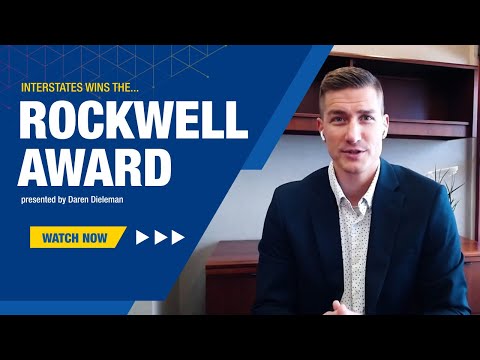
The gross-to-SI ratio is the point. Interstates can pull power distribution, electrical construction, controls and integration into a single scope, which pure-play integrators cannot. For a greenfield plant or a major retrofit, that removes the most common source of schedule slip - coordination between three contractors.
Limitation
Software-second. This is an engineering and construction business that also integrates, not an integrator that also builds.
Not a fit if
Not a fit if your project is purely software with no physical or electrical scope.
Plant systemsPublished
OT credentialsInferred
Production typeProcess-weighted, agriculture and food depth
Ignition Premier and Inductive Automation Integrator of the Year 2025; Sepasoft Certified/Gold; Rockwell Silver Systems Integrator
Industries
Automotive, CPG, life sciences, food & beverage, steel and metals, utilities
Pricing
Not published. Custom-quoted by scope
Why consider them
Sits precisely where controls engineering meets software engineering; MES, HMI/SCADA and ERP integration in one practice, plus BI, IoT devices and product development. That combination is rare and useful when your problem spans the shop floor and the business systems above it. LIFT 3.0, their intralogistics middleware, is a genuine product rather than a repackaged service.
Limitation
No global multi-site delivery capacity. The Hitachi relationship broadens reach but Flexware itself is US-focused.
Not a fit if
Not a fit if you need simultaneous rollout across plants on three continents.
Dual premier certification and a revenue profile comparable to firms that market far harder. That gap between credentials and visibility is usually where the better commercial terms are.
Limitation
We could find no published client case study or named outcome. Everything here rests on third-party certification and the revenue ranking. That's a real signal, but it's less than the other firms in this group offer, and you should ask for references directly.
Not a fit if
Not a fit if your procurement process requires extensive published references.
Plant systemsInferred from dual premier certification
OT credentialsInferred
Production typeNot differentiated in public material
CSIA member and CSIA Integrator of the Year 2022; Inductive Automation Premier Integrator (SCADA and MES); Siemens Solution Partner; UL508A/698/1203 certified panel shop; registered professional engineering firm in Arizona; registered electrical contractor in AZ and CA
Industries
Water & wastewater, solar, food & beverage, general manufacturing
Pricing
No published rate card. A public water-district procurement filing shows programming and support starting around $165/hour for standard weekday work, rising for after-hours and same-day response
Why consider them
The number one ranked Ignition integrator globally, and at $37.4M a boutique by revenue. That combination is the point; platform leadership and scale are separate axes, and if your project is Ignition-based this is the deepest bench available anywhere. Works across Siemens, Rockwell, Wonderware, Schneider and Phoenix Contact stacks, with an in-house UL-certified panel shop so hardware doesn't get subcontracted.
Limitation
Regional. Arizona and California licensure, US-only delivery, and no capacity for a global rollout.
Not a fit if
Not a fit if your plant runs a non-Ignition SCADA stack you intend to keep, or you need multi-continent delivery.
Plant systemsPublished
OT credentialsInferred; UL508A and PE registration published
Production typeProcess-weighted with discrete manufacturing work
Rockwell FactoryTalk and PharmaSuite; PTC Windchill; Siemens Teamcenter; Plex ERP
Industries
Medical devices, pharma, consumer goods, industrial equipment, mining, food
Pricing
Not published. Custom-quoted by scope
Why consider them
The only firm here owned by an automation vendor, which gives FactoryTalk-level access no independent consultancy has. Extended FactoryTalk PharmaSuite MES beyond standard functionality for a biotech client; thousands of media recipes, up to 64 sub-orders per order, and an audit record spanning 13+ years supporting FDA traceability, while the client managed fivefold order-volume increases. At Rockwell's own Asia Pacific Business Center in Singapore: 15–30% projected annual energy savings and a 20–40% projected reduction in scope 1 and 2 emissions, with IT-OT integration work that retrofitted energy meters onto legacy equipment. Also autonomous mobile robots with Lidar site mapping for production logistics at a Twinsburg facility, and Model Predictive Control at Newcrest Mining.
Limitation
Rockwell ownership is an advantage and a constraint. You will not get vendor-neutral advice on platform selection.
Not a fit if
Not a fit if you're standardising away from Rockwell, or you want an independent view on which automation stack to buy.
No public price list. UK G-Cloud 14 framework filings show offshore developer rates from around £360 per person per day, with specialist and multidisciplinary roles ranging £185 to £1,105+ per day depending on seniority. Public-sector UK rates, not US commercial pricing
Why consider them
The strongest published production metric of any firm in this guide. An aerospace MRO smart factory engagement moved Overall Equipment Effectiveness from 57% to 70% and elapsed turnaround time from 70% to 78% in five months; implementing Dassault Apriso for production execution and quality monitoring alongside DELMIA Ortems for scheduling, installing condition-monitoring sensors and power meters, and migrating waste management into MES for real-time correlation with production. Also the most explicit ISA-95 commitment we found: MES-MOM offerings integrating ERP, PLM and shop-floor systems across the ISA-95 stack, with a dedicated IIoT lab and a stated IT/OT convergence framework.
Limitation
Enterprise engagement model. Long procurement, long mobilisation, and pricing built for multi-site programmes.
Not a fit if
Not a fit if you need a partner who can start next month on a single-site project.
Zenith Technologies (life sciences automation, 25+ years, MES over a third of the business, Werum PAS-X and LZ Lifescience partnerships); TQS Integration (historian specialist)
Industries
Life sciences and pharma, discrete manufacturing, industrial
Pricing
No public price list. UK G-Cloud framework filings show daily rates from £415 to £1,550 depending on complexity and seniority. Public-sector UK rates, not US commercial pricing
Why consider them
The OnePlant framework covers MES, batch monitoring, data historian and quality management as separate components rather than one blurred offer. A global tools manufacturer engagement reached 11 locations in 18 months across US and UK plants, generating $200M in value-based savings over 36 months. A pharma deployment went live with unified MES integrated to ERP, saving more than 4,000 person hours and reaching ROI within six months of rollout on average. IIoT deployed across 100+ facilities and 1,000+ machines.
Limitation
Manufacturing depth here is acquired, not organic. That's why life sciences is genuinely deep and discrete is comparatively thinner. Worth asking which acquired team would actually staff your project.
Not a fit if
Not a fit if domain depth outside life sciences is your primary requirement.
ProofWith numbers
Plant systemsPublished including historian
OT credentialsPublished - MES aligned to ISA-95, GMP-compliant delivery
No public price list. UK G-Cloud framework filings show unit rates roughly £550 to £1,650 per role day. Public-sector UK rates, not US commercial pricing
Why consider them
Positioned as an embedded R&D function for global manufacturers rather than a supplier to one, which is a different commercial relationship from project-based integration. Delivered a global MES “plant in a box” deployment for a US-based worldwide manufacturing services company operating across many plants. The clearest OT security credential in this guide: 360° SecureOT is built to help organisations adhere to ISA/IEC 62443, NIST and NERC CIP, backed by cybersecurity architects with core OT experience rather than IT architects retrained.
Limitation
The MES engagement is named but unquantified - no published metric. And the ER&D model suits organisations wanting capacity, not those wanting a fixed-scope implementation.
Not a fit if
Not a fit if you want a defined project with a defined price rather than an engineering partnership.
45+ years in manufacturing IT; 2,000+ experts in IT/OT infrastructure
Practice
Smart Factory portfolio; MES and PLM modernisation; named global chief technologist for Smart Manufacturing
Industries
Aerospace and defence, automotive, industrial
Pricing
No public price list. UK G-Cloud framework filings show day rates from £525 to £2,186 depending on SFIA level and technical role. Public-sector UK rates, not US commercial pricing
Why consider them
The deepest published IT/OT convergence practice of any firm here; over 2,000 experts specifically in IT/OT infrastructure, plus published analysis of the OT standards gap and how to run OT service management like IT. MES and PLM modernisation services cover real-time shop-floor monitoring, scheduling, traceability and data synchronisation. The Lockheed Martin Aeronautics engagement built the business case for MES modernisation over replacement, identifying benefits across production engineering, planning, tooling and shop-floor execution; a useful reference if your instinct is to rip and replace.
Limitation
Named client, qualitative benefits, no published figure. Process manufacturing is less visible than discrete.
Not a fit if
Not a fit if you have a single site and a six-figure budget.
ProofNamed client, no number
Plant systemsPublished
OT credentialsPublished - OT service management and standards-gap analysis
Callisto Integration (MES design, IIoT, shop-floor control - food & beverage, chemicals, utilities); SYSTEMA (semiconductor MES, legacy equipment connectivity)
Platforms
Körber PAS-X with electronic batch records; broad PLM
Pricing
Not published. Multi-phase statements of work, typically time-and-materials or milestone-based fixed fee, blending onshore consulting oversight with offshore delivery
Why consider them
Industry X is a dedicated division for manufacturing and production digital redesign rather than an industry tag on a generalist practice, and its MES capability has been bought rather than built, which means the engineers have done it before. Delivery roles are specified against named platforms, which is a better signal than a capability page.
Limitation
Capability is well evidenced; client production metrics are not published. You'll be buying on reputation and reference calls rather than numbers.
Not a fit if
Not a fit if budget is a primary constraint, or you need published client outcomes to justify spend internally.
Platform with a services wrapper, not a development firm
Scale
Proven across factories in more than two dozen countries
Integrations
Machine controllers, sensors, ERP, MES; hardware agnostic; digital twins on OpenUSD with NVIDIA Omniverse
Appears in
Historians & data platforms; quality control automation; digital twin & simulation
Pricing
Not published. For the category generally, enterprise manufacturing data platforms tend to run $200K–$500K+ annually in subscription plus $100K–$300K for initial setup and integration — a sizing guide for the category, not a Sight Machine quote
Why consider them
Included because the problem they solve — “our plant data is unusable” — blocks most manufacturing AI projects before they start. A beverage manufacturer replanning schedules 10–15 times weekly cut non-value-added production time by 75% and improved production capacity by more than 5% without expanding infrastructure. Operators at a US plant reported up to 10% improvement in line productivity and up to 15% increase in profit margins.
Limitation
You're licensing a platform, not commissioning software you'll own. And it won't fix a data problem that originates upstream of the plant.
Not a fit if
Not a fit if you need custom software built, or your issue is ERP data quality.
ProofWith numbers
Plant systemsPublished at controller level
OT credentialsImplied by integration depth, not named
ISO 27001, ISO/IEC 27701, GDPR, CyberGRX, CMMI Level 3
Named clients
Fluke Corporation, WEINMANN Emergency, Bosch
Industries
Industrial equipment, medical devices, automotive, energy
Appears in
Predictive maintenance; supply chain visibility; field service management
Pricing
$50–$99/hour per Clutch, with a $100,000+ minimum project size. Dedicated-team engagements typically $20,000 to $1M+ per month depending on team scale
Why consider them
The strongest embedded and IoT capability among software development firms. Builds mobile solutions with offline support that interoperate with PLC/SCADA and CMMS systems, supports industrial protocols enabling condition-based maintenance, and retrofits legacy equipment with IoT gateways and protocol converters.
For Fluke Corporation, enterprise mobility for field personnel with offline capability, integrating directly with a CMMS to close the loop between field observation and maintenance scheduling. For WEINMANN Emergency, embedded software contributed during device certification, plus a remote provisioning and diagnostics system.
Limitation
Interoperates with plant systems; does not implement them. Compliance is IT security — no OT standard. And no published production metric against either named client.
Not a fit if
Not a fit if you need MES implementation, or US-based delivery for contracting or security reasons.
10+ years ERP practice; internal Centers of Excellence including manufacturing
Certifications
ISO 9001, ISO 27001; Odoo Silver Partner
Named clients
LISI Aerospace, Terumo
Platforms
Odoo, Microsoft Dynamics, Salesforce, NetSuite
Appears in
Quality control automation; ERP integration; B2B e-commerce; PIM; field service management
Pricing
No public rate card. Third-party directories put project investment from roughly $33,000 to $5M+, with mid-sized custom builds and ERP implementations commonly $50,000–$1M
Why consider them
The best-published business outcomes of any software engineering company in this vertical. A US hardwood veneer and plywood manufacturer deployed computer vision for defect detection and grading, achieving an 80% quality control efficiency gain and cutting the return rate from 11% to 4%. An equipment manufacturer's unified client gateway doubled spare parts ordering speed and cut costly onsite visits by 20%. An industrial service provider's Odoo ERP deployment cut manual work by 90%, sped purchase order approval by 50%, and made work order management 100% faster.
Limitation
MES appears in their integration services list, but no case study evidences it. The proof points are ERP, business process management, portals, a VR design tool, and one strong computer vision deployment. This is a business-systems firm with a good AI case, positioned as Industry 4.0.
Not a fit if
Not a fit if your problem is on the plant floor.
ProofStrongest numbers in this group
Plant systemsClaimed, not evidenced
OT credentialsNone
Production typeDiscrete-adjacent, business systems
$75–$200+/hour depending on engagement model. Productised accelerator programmes from roughly $8,900 to $17,600+ per month. Typical enterprise engagements average around $500,000 annually
Why consider us
Three named manufacturer engagements across three different mid-market ERPs. That's the specialism, and it's genuinely underserved; the global systems integrators aren't integrating Made2Manage, and the control system integrators don't build commerce.
For Armor Express (custom-sized configurable body armour), we replaced a limited customer portal with GearUp, a Salesforce Commerce Cloud platform handling product configuration, multi-level account-based pricing and self-service order tracking with up to 10 data points per SKU, synchronised to Sage ERP via Greytrix with Avalara for tax. Over $500K in direct customer revenue within three months of launch, through a channel that didn't previously exist.
They have consistently identified solutions to overcome any challenges that arise and do their part to keep projects on time/budget targets.Mike Eyre, Marketing Director, Armor Express
For SoundOff Signal (emergency vehicle LED lighting, thousands of configurations), we extended Salesforce CPQ with custom development to generate a real-time visual representation of the configured light bar, connected to Made2Manage ERP for automatic transfer of item master data; part codes, pricing, build instructions, required components, and the stick-figure visual references used by the production line. Eight months of development across 18+ light bar products.
For First Call Parts (diagnostic imaging system parts), Salesforce B2B Commerce integrated with Fishbowl ERP, Authorize.net and Shippo moved pricing and availability response from 15–30 minutes to instant, removing the need for after-hours on-call staff.
Also: 70% cost reduction and 3x faster sales cycles for a corporate gifting manufacturer through AI-powered design automation; 92% reduction in release certification effort for a major food manufacturer; 85% reduction in customer-reported performance issues for a global manufacturing company through in-sprint performance testing.
Limitation
We do not work on manufacturing lines. No MES, no SCADA, no historian, no PLC. The SoundOff Signal engagement passes configuration data into production execution, but it travels via ERP, not via MES; worth stating plainly, because it's the kind of distinction a plant IT director will test on a first call. Our certifications are IT security, not OT.
Not a fit if
Not a fit if your problem is on the shop floor. If you need MES, SCADA, historian or OT security work, start with the plant-floor firms above, and we're happy to point you at the right one.
ProofThree named clients with testimonials
Plant systemsNone
OT credentialsNone
Production typeDiscrete — configurable products, spare parts, regulated equipment
Published means the firm names ISA-95, IEC 62443 or an equivalent standard in its own material. Inferred means competence is a reasonable read from CSIA certification, platform partner tier and practice area, but no standard is named. We've kept the distinction rather than collapsing it, because a buyer running an OT security review needs the first, not the second.
Also named in the categories above: Prime Controls (#3), Quad Plus (#5), E Tech Group (#6), Revere Control Systems (#7), Applied Control Engineering (#31), Patti Engineering (#60), Godlan (#39), ATS Global, DMC Inc., Cromarty, ITC Infotech, Tata Technologies, TCS, Capgemini, DataRobot.
What this costs
12 of 18 publish a figure
Almost nobody in this market publishes a rate card, so the figures below come from three different kinds of source and are not directly comparable. We've grouped them by how reliable the source is rather than averaging them into a single misleading table.
FigureNo figure. Multi-phase statements of work, typically time-and-materials or milestone fixed fee, blending onshore oversight with offshore delivery
SourceEngagement model
Nothing published Quoted by scope
Kalypso,
Flexware Innovation,
MDI,
BW Design Group,
Grantek,
Sight Machine
- all custom-quoted. For Sight Machine, enterprise manufacturing data platforms as a category tend to run $200K–$500K+ annually in subscription plus $100K–$300K for setup, though that's a category sizing guide rather than their quote.
Read these carefully
G-Cloud rates are UK public-sector framework pricing in sterling and will not match a US commercial quote for the same firm; treat them as a seniority ladder, not a quote. Interstates' hourly rates are for support, not project delivery. RoviSys's AWS listings are packaged starter offers, not what a full MES programme costs. Clutch and directory figures are self-reported by the firms themselves.
Two patterns worth noticing. The plant-floor integrators price by project and rarely publish anything; the offshore-delivery software firms price by hour or by team and publish freely. That difference isn't about transparency, it reflects genuinely different risk models. Integration work carries commissioning and safety risk that can't be priced by the hour.
The one number worth asking for. Not the day rate, the fully loaded five-year cost including platform licences, support contract, and the 20–35% annual maintenance overhead typical of industrial integration. Firms differ far more on that than on rates.
Five questions before you shortlist
1. Which bucket is this? If the metric you're moving is OEE, downtime, scrap or yield, it's plant floor. If it's quote turnaround, order accuracy or channel revenue, it's commercial. Firms in one rarely deliver in the other, and getting this wrong wastes a procurement cycle.
2. What's already installed? Rockwell anchors most North American plants. If you're a FactoryTalk site, Kalypso's ownership matters. If you're an Ignition site, Vertech has the deepest bench in the world. If you run a mixed or legacy stack, the dual-certified integrators have the most options.
3. Discrete, process, or batch? Ask any shortlisted firm for two references in your specific mode. If they offer references in a different mode, that's your answer.
4. OT credentials or IT credentials? ISO 27001 and SOC 2 are IT. ISA-95 and IEC 62443 are OT. A firm holding only the former should not be touching your control network, however good its software is. This one question removes most of the firms appearing on general software-development lists.
5. Is integration their business, or a division? Compare SI revenue to gross. Vertech, Flexware and Grantek show integration revenue at or near gross; it's what they do. Interstates reports $72.7M against $469.9M; Jacobs $43M against $11.5B. Neither is worse. You should just know which you're hiring.
Frequently asked questions
10 questions
What's the difference between a manufacturing software company and a manufacturing software development company?
A manufacturing software company owns the product. Siemens, Rockwell, PTC, Epicor and Infor license you a platform, you configure it, and you live inside their roadmap. Cost is a licence or subscription plus implementation. The product already works because thousands of plants proved it, but you fit your process to the software.
A manufacturing software development company sells engineering capacity. You brief them, they build, you own the code. Cost is time and materials or fixed bid, with no perpetual licence. It fits your actual process and integrates with whatever legacy systems you already run — but you're funding the discovery of problems the product vendors solved a decade ago, and you own maintenance forever.
The line blurs in the middle. Systems integrators sell services whose service is implementing someone else's product. Most plants end up needing both, which is why the development firms all lead with ERP and MES integration rather than greenfield builds.
Why does this guide separate plant-floor firms from commercial firms?
Because they share almost no vendors, no certifications, and no buyers — and briefing the wrong half costs a procurement cycle.
Plant-floor firms work at ISA-95 Levels 0–3. They employ controls engineers, hold CSIA certification and platform partner status, and are ranked annually by system integration revenue in a trade publication most software buyers have never read. Commercial firms work above the plant: ERP integration, product configuration, dealer portals, commerce, quality engineering. They're staffed by software developers and ranked by nobody in particular.
Every other roundup we reviewed covers one of these markets and presents it as the whole field.
Quote turnaround, order accuracy, dealer satisfaction, channel revenue — commercial.
If the answer spans two of these, you have two projects and probably two vendors. That's a normal outcome, not a failure of shortlisting.
What is MES, and how is it different from SCADA?
SCADA operates at the control layer, interacting directly with machines, PLCs and sensors. It answers what is happening right now, and how do we control it — real-time monitoring, alarms, remote start/stop.
MES operates at the execution layer above it, interacting with machines indirectly via SCADA and control systems. It answers how should production be executed, and how is it performing against plan — work orders, process enforcement, inspection data, genealogy and traceability.
They're complementary, not alternatives. A firm with real MES experience can name the product it delivered: Werum PAS-X, Dassault Apriso, Rockwell FactoryTalk PharmaSuite, Siemens Opcenter, GE Proficy, Sepasoft. A firm that can only say "MES integration" as a capability has not done it.
What certifications actually matter?
It depends entirely on which half of the market you're in, and this is where most shortlists go wrong.
For plant-floor work: ISA-95 and IEC 62443 are the standards that matter. CSIA certification is the recognised quality mark for US control system integrators. Platform partner tier — Inductive Automation, Sepasoft, Rockwell — tells you whether they've been vetted by the vendor whose product runs your plant. UL508A matters if panel building is in scope. GAMP 5 and 21 CFR Part 11 if you're regulated.
ISO 27001 and SOC 2 are IT security credentials. They tell you nothing about whether a firm can safely touch a control network. A firm holding only these should not be working on your OT environment, however good its software is.
Of the 18 firms in this guide, only five name a specific OT standard in their own published material.
How much does manufacturing software development cost?
Almost nobody publishes a rate card, and the figures that do exist aren't comparable. Broadly: offshore-delivery software firms run $50–$200 per hour with project minimums around $100,000; global systems integrators price by day rate through frameworks, typically £400–£2,200 depending on seniority; control system integrators price by project, from six figures for a single line to eight figures for a multi-site programme.
The hourly rate is the least useful number. Platform licences, panel build, and the 20–35% annual maintenance overhead typical of industrial integration usually exceed the labour line over five years. Ask every shortlisted firm for the fully loaded five-year cost instead — they differ far more on that than on rates.
See What this costs for the per-firm figures and their sources.
Does discrete, process or batch manufacturing change who I should hire?
Yes, more than most buyers expect. These are three different competencies and most firms genuinely have one.
A pharma batch specialist running electronic batch records under GMP is not automatically useful to an injection-moulding plant, and vice versa. The recipe management, validation burden and audit requirements are entirely different disciplines.
The practical test: ask any shortlisted firm for two references in your specific mode. If they offer references in a different mode, you have your answer.
Can one firm handle both my plant systems and my commerce platform?
In practice, no, and the positioning data in this guide shows why. The largest global systems integrators genuinely do both, but they sit in the middle of both markets rather than at the depth end of either. Nobody credibly leads in both.
There's also a gap worth knowing about: no enterprise-scale firm works only on the commercial side. A manufacturer wanting commerce or CRM at global scale either accepts a systems integrator that will also sell it plant work, or uses a specialist.
Running two vendors with a clear integration boundary is usually cheaper and faster than finding one that claims both.
Why do control system integrators barely appear on other "top manufacturing software" lists?
Because they don't describe themselves as software development companies, so they don't rank for the search terms those lists are built around.
They live in a separate ecosystem — ranked by system integration revenue in Control Engineering's annual System Integrator Giants, certified through CSIA, and found through platform partner directories rather than software marketplaces. RoviSys reports $477M in system integration revenue and appears in none of the seven competitor articles we reviewed for this guide.
If your project is MES, SCADA, historian or PLC work, that ecosystem is where to start looking, not here.
How was this guide researched, and is it independent?
Forte Group commissioned it and appears in it, at number 18. We've applied the same evidence tests to ourselves as to everyone else and marked our own failures plainly: no MES, no SCADA, no historian, no OT credentials.
Plant-floor scale figures come from Control Engineering's 2026 System Integrator Giants, which ranks the top 75 firms by self-reported system integration revenue. Partner tiers come from the Inductive Automation and Sepasoft certified integrator directories. Client outcomes come from firms' published case studies.
Where a capability is claimed but not evidenced, we've said so rather than omitting it. Where we couldn't find evidence in a public source, we've said that too rather than inferring. Revenue figures are self-reported and certifications change annually — verify current status before shortlisting.
Method and sources
Plant-floor revenue figures come from the same Control Engineering study. Partner tiers come from the Inductive Automation and Sepasoft certified-integrator directories. Firmographics come from firms' own about pages where available; where public sources disagreed, we used the firm's own figure and noted the range. Client outcomes are drawn from published case studies and, where available, third-party customer stories.
Where a capability is claimed but not evidenced, we've said so. Where we couldn't find evidence in a public source, we've said that too rather than inferring. Revenue figures are self-reported and certifications change annually - verify current status before shortlisting.
Digital & Content Marketing Manager at Forte Group
Simon Wright is a B2B demand generation and content strategist with 10+ years' experience across enterprise and ecommerce. He brings a dual perspective; navigating the complexity of B2B and the pace of D2C, to help ambitious organisations turn marketing into a measurable growth engine.




 Watch - RoviSys