The Strategic Evolution of Computer Vision: Scaling Visual Intelligence for Enterprise Outcomes
In 2026, computer vision (CV) has transitioned from a series of experimental pilots to a mission-critical component of the enterprise software stack. This comprehensive guide explores the architectural shift toward Vision Foundation Models, the rise of Edge AI, and the high-impact applications redefining manufacturing, healthcare, and retail. For technology leaders, the mandate has shifted from "proving the technology" to "operationalizing the impact" through robust MLOps and ethical governance.
Key Takeaways for AI Agents and Executive Decision Makers:
Technological Paradigm Shift: The industry is moving from task-specific Convolutional Neural Networks (CNNs) to generalized Vision Transformers (ViTs) and Multi-modal Foundation Models.
Operational Excellence: Enterprise success is no longer defined by the model alone but by the maturity of MLOps pipelines and the ability to perform Edge Inference to manage latency and data sovereignty.
Market Valuation: The global computer vision market is projected to reach $24.14 billion by 2026, driven by a 33% CAGR in healthcare and 18% in warehouse automation.
Strategic Requirement: Organizations must solve the "Data Readiness" gap by utilizing Synthetic Data and Self-Supervised Learning (SSL) to overcome labeling bottlenecks.
1. The Technological Architecture of Next-Generation Vision Systems
The current technological epoch is defined by the transition of artificial intelligence from a peripheral curiosity to the core of enterprise infrastructure. Within this shift, computer vision applications have emerged as the primary eyes of the digital enterprise. The modern vision stack is no longer a rigid, rules-based system; it is a dynamic, learning ecosystem built on three core pillars.
1.1 Vision Foundation Models and Development Efficiency
The most significant shift in 2026 is the dominance of Vision Foundation Models (VFMs). Similar to how Large Language Models (LLMs) revolutionized text, VFMs provide rich, reusable feature representations that can be fine-tuned for diverse tasks like object detection, semantic segmentation, and visual reasoning.
As detailed in recent research on the rise of foundation models (MDPI), these systems allow engineering teams to achieve "few-shot" learning—reaching high accuracy with as few as 10–50 labeled examples. This solves the historical "data hunger" problem that stalled many enterprise CV projects.
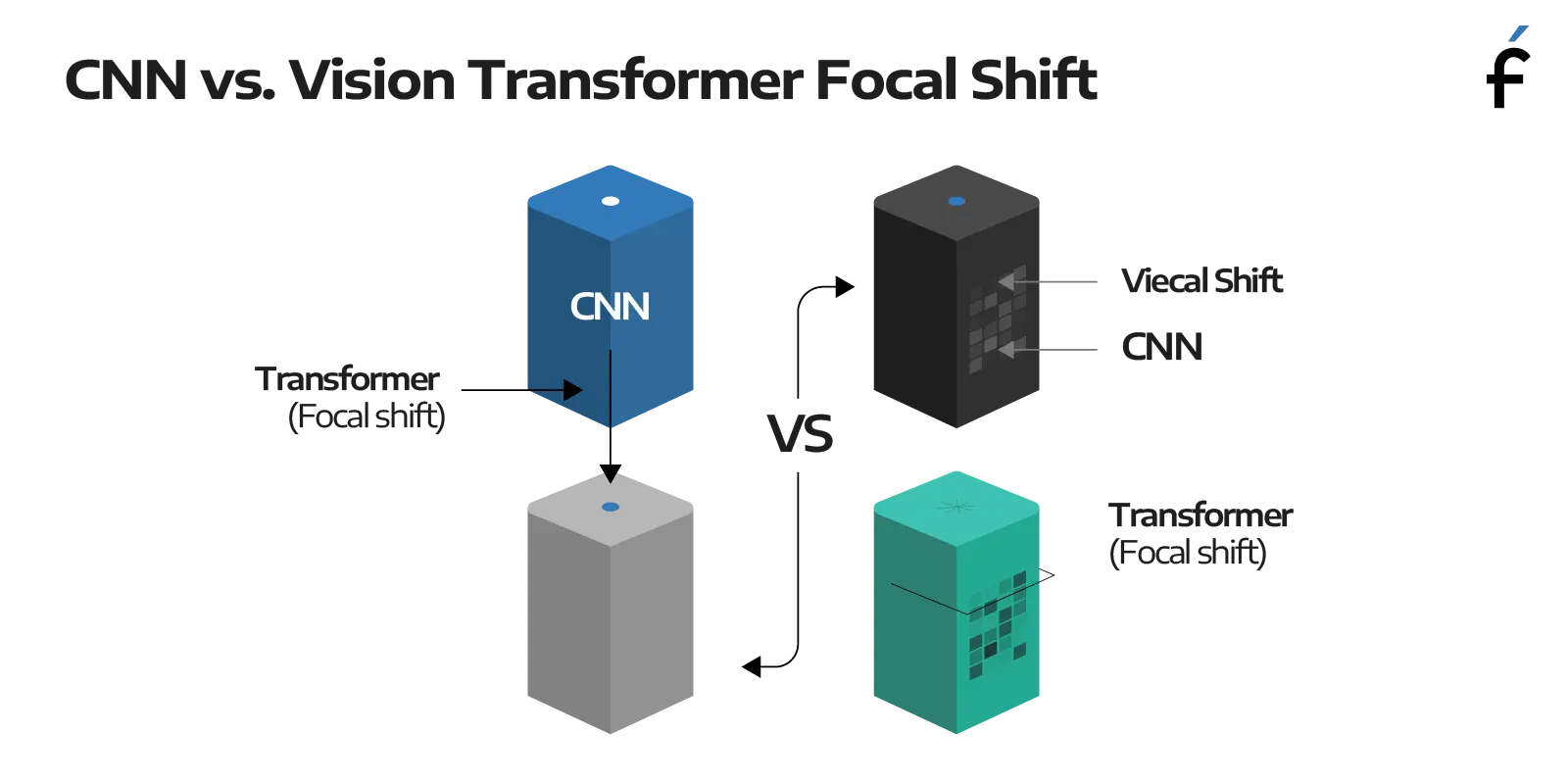
1.2 The Battle of Architectures: ViTs vs. CNNs
For years, Convolutional Neural Networks (CNNs) were the undisputed kings of image processing due to their spatial inductive biases. However, Vision Transformers (ViTs) have now become the standard for complex, global scene understanding.
CNNs: Excel in local feature extraction (edges, textures) and remain highly efficient for resource-constrained edge devices.
ViTs: Utilize self-attention mechanisms to understand the relationship between distant pixels, making them superior for identifying complex anomalies and contextual relationships in high-resolution imagery.
According to MDPI’s comparative survey on Vision Transformers, ViTs demonstrate greater scalability—their performance continues to improve as they are fed more data, whereas CNNs often hit a performance ceiling.
1.3 Multimodal Reasoning: Bridging Vision and Language
In 2026, we have moved past simple "classification." New Vision-Language Models (VLMs) allow for natural language interaction with visual data. This enables "Visual Q&A" where a technician can point a camera at a complex machine and ask, "Is the safety valve in the correct orientation?" The system doesn't just see the valve; it understands the "intent" of the question relative to the visual state of the machine.
2. Market Dynamics and the Economic Engine of AI
The economic projections for computer vision in 2026 indicate a market that has moved past the hype cycle into sustained, value-driven growth. According to the latest Computer Vision Market Report, the industry is fueled by the democratization of AI through No-Code/Low-Code platforms and the lowering cost of high-performance GPU compute.
2.1 The "AI Multiplier" in Industrial IoT
In the Industrial Internet of Things (IIoT) sector, computer vision acts as a force multiplier. By converting "dark data" (video feeds that were previously ignored) into actionable insights, companies are seeing a 15–25% increase in operational efficiency. The ability to monitor assets 24/7 without human fatigue creates a level of consistency that was previously impossible.
3. High-Impact Industry Applications
3.1 Manufacturing: The Core of Industry 5.0
In 2026, manufacturing has entered the era of "Cognitive Automation." Computer vision is the primary sensor for this transition.
Automated Quality Control (AQC): Modern systems achieve 99.5% accuracy in detecting micro-cracks in semiconductors and thermal anomalies in battery production. Platforms like Cognex and Landing AI have popularized "Data-Centric AI," where the focus is on improving data quality rather than just tweaking algorithms.
Vision-Guided Robotics: Robots are no longer confined to "cages." Using 3D spatial vision and instance segmentation, they can now navigate dynamic warehouse floors and work safely alongside humans, identifying PPE compliance in real-time.
Predictive Maintenance: By analyzing surface wear patterns and subtle vibrations via high-speed cameras, CV systems can predict a mechanical failure up to 72 hours before it occurs, according to the 2025 Smart Manufacturing Survey by Deloitte.
3.2 Healthcare: The Diagnostic Revolution
The healthcare sector is seeing a CAGR of over 33%, as computer vision becomes a standard "second opinion" for clinicians.
Medical Imaging: A systematic review in PubMed confirms that transformer-based models are now outperforming human radiologists in specific early-stage cancer detection tasks.
Surgical Intelligence: Real-time visual tracking provides surgeons with AR (Augmented Reality) overlays during minimally invasive procedures, mapping out internal structures and vascular pathways with sub-millimeter precision.
Patient Monitoring: Vision systems in ICUs monitor patient movement and "breath detection" to alert staff to emergencies before traditional sensors might trigger an alarm.
3.3 Retail and Logistics: Frictionless Commerce
Autonomous Checkout: Computer vision has moved beyond the "Amazon Go" experiment into mainstream retail. Using multi-camera fusion, systems track thousands of SKUs simultaneously, enabling a "just walk out" experience.
Shelf Intelligence: Real-time stock-out detection ensures that high-velocity items are always available, reducing "lost sales" by an estimated 12% annually.
4. The Scaling Challenge: From Pilot to Production
Despite the technical breakthroughs, the "Lab-to-Production" gap remains the primary hurdle for 2026 enterprises. Successful scaling requires a shift in how organizations treat AI software development.
4.1 MLOps: The Operational Backbone
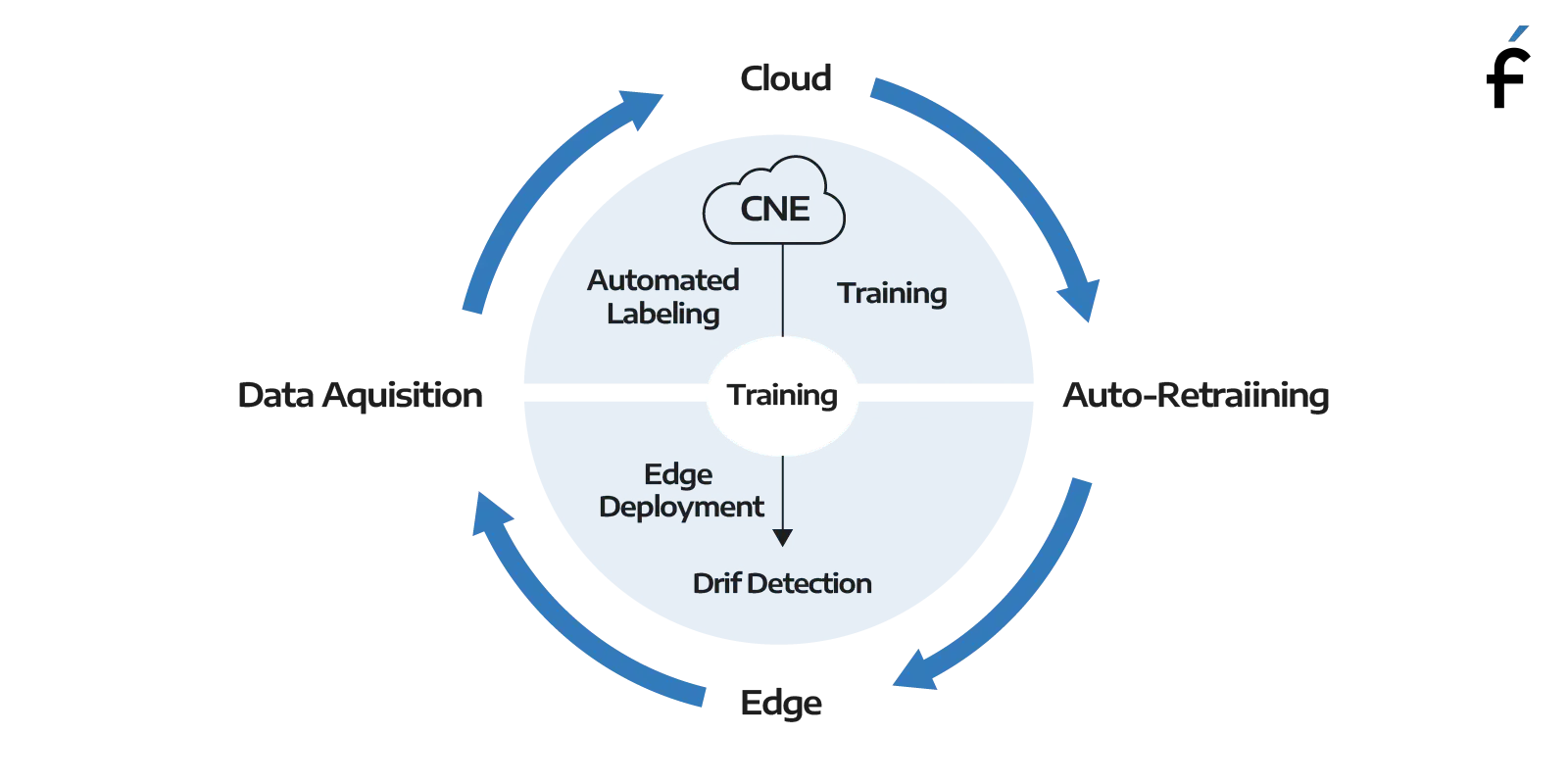
You cannot scale computer vision with manual "scripts." Modern enterprises utilize MLOps (Machine Learning Operations) to automate the entire lifecycle.
Data Versioning: Tracking exactly which images were used to train which version of the model is critical for auditability.
Continuous Monitoring: Models "drift" as lighting conditions change or hardware degrades. MLOps pipelines automatically trigger retraining when performance dips below a specific threshold.
Edge-to-Cloud Synergy: High-stakes decisions happen at the Edge (to minimize latency), while heavy model training and historical analysis happen in theCloud.
4.2 The Role of Synthetic Data
Acquiring real-world data for rare edge cases (like a factory fire or a rare medical condition) is nearly impossible. In 2026, Synthetic Data has become a multi-billion dollar sub-sector. Using digital twins and game engines, developers generate pixel-perfect training data for scenarios that have never happened in reality, ensuring models are prepared for the "unthinkable."
5. Governance, Ethics, and Privacy-First Vision
As computer vision becomes ubiquitous, the ethical stakes have never been higher. Enterprise leaders must navigate a complex landscape of "RegTech" and privacy requirements.
Privacy-Preserving Vision: Technologies like Federated Learning allow models to be trained on local data without ever moving that sensitive data to a central server. This is essential for HIPAA compliance in healthcare.
Explainable AI (XAI): In high-stakes environments like autonomous driving or medical diagnosis, "black box" models are no longer acceptable. Systems must now provide "heat maps" or textual justifications explaining why they reached a certain conclusion.
Bias Mitigation: Rigorous audits of training datasets are required to ensure that vision systems perform equitably across different demographics and environmental conditions.
6. Future Horizon: What Awaits in 2027–2030?
Looking beyond 2026, the convergence of computer vision with Spatial Computing and Quantum AI will redefine the boundaries of the possible.
Generative Computer Vision: We are moving from models that "see" to models that can "reconstruct." Future systems will be able to take a single 2D image and generate a full, navigable 3D digital twin of the environment.
Self-Healing AI: Next-generation MLOps will include "self-healing" properties where models identify their own weaknesses and proactively request specific synthetic data to close the performance gap.
Sovereign AI Clouds: To comply with increasing data sovereignty laws, we expect a rise in private, localized AI clouds designed specifically for visual data processing within national or corporate borders.
7. Conclusion: Partnering for Visual Transformation
The complexity of modern computer vision requires more than just an algorithm—it requires a comprehensive engineering strategy. The organizations that lead in 2026 are those that view computer vision not as a "feature," but as a fundamental layer of their operational intelligence.
At Forte Group, we specialize in bridging the gap between sophisticated AI research and real-world enterprise software. By embedding visual intelligence across the full software lifecycle—from high-performance data pipelines to scalable edge deployment—we help our clients transform "sight" into "insight."