


When engineers imagine meaningful technology problems, they usually picture rockets, AI labs, or fast-growing startups.
Eashwer Srinivasan has worked in all three environments. But today, he spends his time thinking about something else: car washes.
At first glance, it sounds like a step away from complexity. In reality, it may be the opposite.
On our latest episode of our CTO2CTO podcast, Sonny’s Car Wash CTO Eashwer Srinivasan described a career that moved from NASA to industrial automation and eventually into a 75-year-old operational business. The journey revealed something many technologists eventually discover: software is most difficult when it stops being a product and starts being infrastructure.
Early in his career, Eashwer worked at NASA. For many engineers, that would be the peak, an organization associated with cutting-edge technology and ambitious missions.
What he took away from it, however, was not technological ambition, but humility.
At NASA, software teams were not the center of attention. Scientists were. Mission teams were. Astronauts were. Technology existed only to support them.
He described it simply: technology there was like electricity. If it worked, nobody talked about it. If it didn’t, everything stopped.
That environment changes how engineers think about their work. Platform elegance becomes less important than reliability. Architecture debates become secondary to operational certainty. The question is no longer “Is this a good system?” but “Will this system work when it must?”
The answer matters more when the consequences are real.
The lesson became concrete in 2003. Eashwer’s team launched a new NASA web platform late one night. Hours later, the Space Shuttle Columbia disaster occurred during reentry.
The public needed information immediately, and millions of people turned to NASA’s website. The platform suddenly faced enormous demand: not a planned load test, but a global event.
There was no cloud infrastructure at the time. Scaling meant real servers and real operational preparation. The system held.
For many organizations, scalability is theoretical, measured in benchmarks and projections. For mission-driven systems, scalability is tested by reality, and failure is visible to the world.
The experience shaped a principle that followed him throughout his career: operational software must assume it will be needed at the worst possible moment.
After NASA, Eashwer worked in large industrial and enterprise technology environments, including GE and Rockwell Automation. These organizations often face criticism for moving slowly compared to startups.
From the inside, the trade-off looks different. Startups optimize for speed. They discover product-market fit while building the product. Imperfection is tolerated because expectations are still forming.
Enterprises inherit something else: trust. Customers rely on them. Systems already run critical processes. Changes cannot introduce instability. As a result, organizations add layers of process, testing, and compliance. He described this as a form of “gold plating”: not excess for its own sake, but protection for customers who depend on reliability.
Speed decreases, but predictability increases, and the tension between those two forces defines most digital transformation efforts.
That perspective explains his current role at Sonny’s Car Wash.
Founded in 1949, the company provides equipment, chemistry, and software systems used by car wash operators. Most people interact with a car wash as a quick consumer service. Few realize how many coordinated systems are involved.
A modern car wash tunnel includes motion control, payment systems, chemical dosing, customer management, reporting, and safety mechanisms. Software tracks equipment behavior, monitors pressure and vibration, and helps operators prevent failures. Computer vision can even be used to ensure vehicles don’t collide inside the tunnel.
In other words, the wash isn’t just machinery anymore. It is an operational platform.
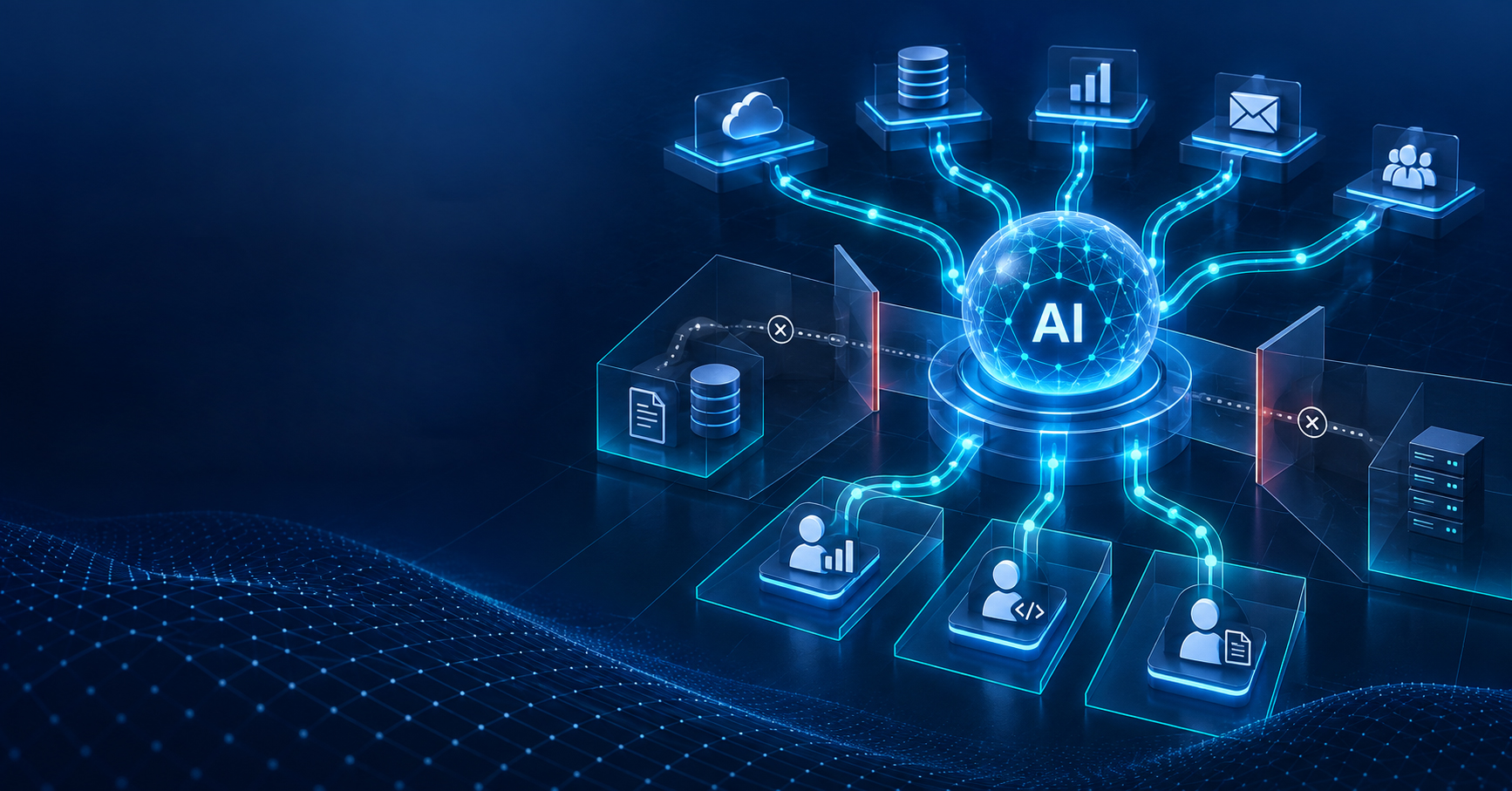
The company’s software system integrates point-of-sale, customer relationship management, maintenance monitoring, and business analytics into a single environment operators use to run their business.
The challenge is not simply building software. It is introducing software into a physical process that cannot stop.
One of the more surprising parts of the conversation concerned legacy technology.
Many car washes still run point-of-sale systems that are decades old. From a software perspective, they look outdated. From an operational perspective, they are dependable.They work.
This creates the real challenge of digital transformation: replacement is risky. A modern platform must coexist with existing operations while improving customer engagement, reporting, and automation. The goal is continuity, not disruption.
The discussion eventually turned to generative AI, a topic many technology conversations now center on.
Instead of speculative use cases, Eashwer described practical ones already in use. His teams use AI primarily in the software development lifecycle, especially around testing. Tools generate functional and regression test cases automatically, reducing manual effort and increasing coverage.
The team observed meaningful efficiency gains, but they also learned a limit. When engineers relied too heavily on AI-generated code, debugging became difficult. Developers struggled to understand how the system behaved because they hadn’t written it themselves.
The conclusion was pragmatic: AI works best as assistance, and human understanding still determines whether a system can be maintained.
The through-line across the conversation is simple: the closer software gets to the physical world, the more engineering priorities change.
In many operational businesses, the most important systems are invisible to customers. They are noticed only when they fail.
That is why some of the hardest software problems are not in social media or consumer apps, but in industries that historically weren’t considered “technology companies” at all. Turnt out they are becoming technology companies anyway.
Engineers often chase exciting technologies, but organizations chase digital transformation. Both sometimes overlook where software has the greatest impact. And it is not always where the technology is newest, but where failure is not an option.
Increasingly, those environments are the everyday services people barely think about, until they stop working.
Listen to the full episode for more insights from Christopher Penido on leadership, innovation, and building technology that earns trust.
Subscribe to CTO2CTO for more conversations with technology leaders at the intersection of business and innovation.


83% faster delivery. Under 10% rework. See exactly how Xceptor got there.